Nuts and Seeds Vocabulary for Kids
The Nuts and Seeds Vocabulary for Kids in this guide contains 16 food words, phrases, and learning activities. Children name familiar foods, sort words into nuts and seeds, describe pictures, and use each word in a sentence. School-age children can begin with four to six words and add more as recall improves. Photos help because foods, recipes, and packaging differ across cultures. Home-language connections can reinforce each English word.
📥 Nuts and Seeds Vocabulary Practice
Read, match, sort, and use useful food words in context.
Leave your email — we'll send the PDF to your inbox.No spam — the PDF plus one short reminder. Unsubscribe anytime.
Core Words and Useful Phrases
A practical Nuts and Seeds Vocabulary for Kids set should include singular and plural forms. Teach “one almond” beside “two almonds.” This contrast prepares children to build sentences instead of repeating labels.
The table groups words as they appear in shops, recipes, and everyday English. Peanut sits with nuts because food labels and ordinary speech often classify it there, despite growing in a pod.
Using the Words in Context
When practising Nuts and Seeds Vocabulary for Kids, progress from naming to describing. A child might say, “This is a walnut,” then add, “The walnut has a hard shell.” Other examples include “These are pumpkin seeds,” “I can see sesame seeds on the bread,” and “The cashew is curved.”
Questions create natural repetition: “Is this an almond or a hazelnut?” “Are these seeds?” “Which word begins with p?” Let your child point before answering when speaking feels hard. Their choice still demonstrates understanding.
Add personal language without requiring tasting. Children can say, “We use sesame seeds at home,” “I have seen pistachios,” or “I do not eat nuts.” These sentences respect different diets, family dishes, and familiarity levels.
How to Introduce the Vocabulary
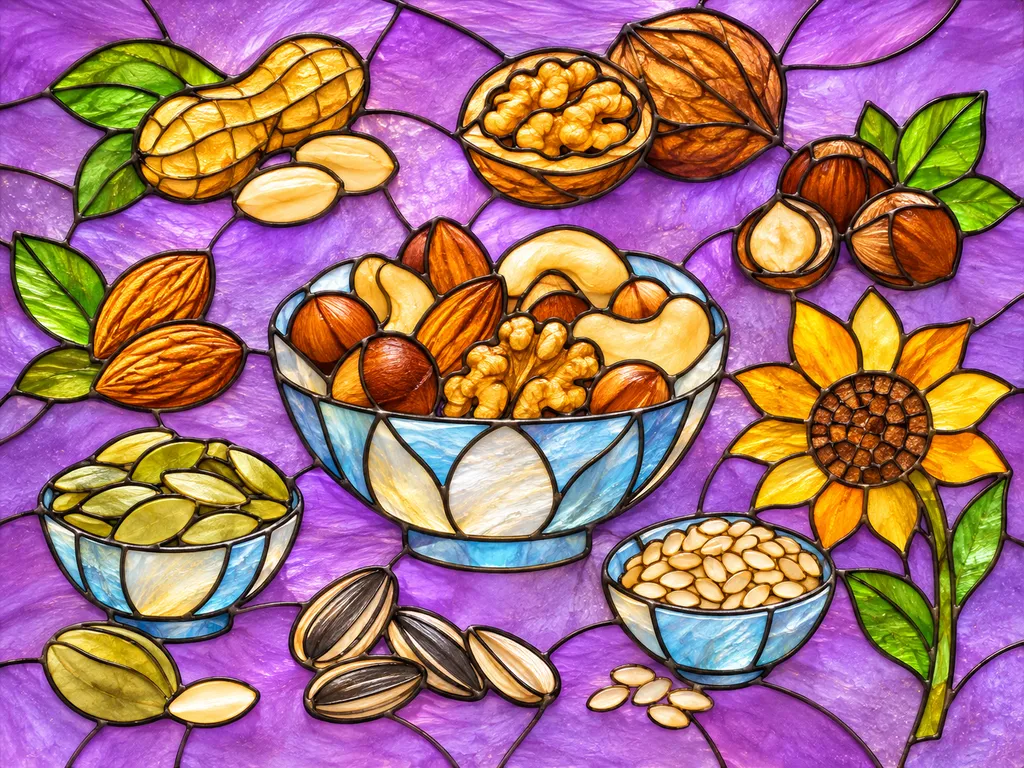
Begin with photos of four contrasting foods: a walnut, cashew, pumpkin seed, and sunflower seed. Say each word at normal speed, then slowly. Your child points, repeats, and matches each spoken word to its picture. Add two new cards after the first set becomes familiar.
Next, sort the cards under two labels: nuts and seeds. Request a full sentence after each choice: “A pistachio is a nut” or “A chia seed is a seed.” LearnLink tutors build from recognition to a short phrase, then a complete sentence.
Try It: Point, Sort, and Say
Place six picture cards face up. Name one for your child to point to, then ask them to sort the cards into nuts and seeds. Finish with three clues: “It is curved,” “It can be green,” or “You may see it on bread.” Change roles so your child gives the clues.
Activities for Different Ages
Nuts and Seeds Vocabulary for Kids activities work when tasks match the learner’s age. For school-age kids, use picture matching, pointing games, and two-word phrases such as “brown almond” or “small seed.” Limit each round to five minutes, then repeat the set another day.
For school-age kids, play a memory game with matching word and picture cards. Children can design a pretend market stall, group foods, and label prices with simple classroom numbers instead of real shopping claims. Shop language includes “What are these?”, “They are walnuts,” and “I would like some pumpkin seeds.”
For school-age kids, use ingredient lists, menus, or recipe photos. Ask learners to find each nut or seed, identify where it appears, and compare two foods: “Poppy seeds are smaller than pumpkin seeds.” Older children can write a short snack description while respecting foods they avoid.
Common Mistakes and How to Correct Them
Children often drop the plural ending: “two almond” instead of “two almonds.” Model the corrected phrase without stopping the activity: “Yes, two almonds.” Use some in “some peanut butter” and “some ground flaxseed,” where separate pieces are not counted.
Children may confuse similar small seeds. Instead of testing memory alone, place two pictures side by side and identify one visible feature: “Pumpkin seeds are larger in this picture; sesame seeds are smaller.” Direct comparison supports meaning and recall.
Longer words such as pistachio and sunflower seed may require slow practice. Clap the parts, pronounce the whole word, and return to the sentence. Accept natural accent differences; correct pronunciation only when understanding becomes difficult.
A Short Practice Routine for Home
Use a ten-minute routine two or three times during the week: two minutes reviewing picture cards, three sorting them, three answering questions, and two making sentences. Change the order next time so your child recalls meanings instead of memorising a sequence.
End with one achievement your child can demonstrate: naming four cards, giving two clues, or writing three labels. Retain old words while adding one or two new ones. Pictures suffice when allergies, diets, or setting rules make handling or tasting food unsuitable.
- Choose five picture cards showing almonds, walnuts, peanuts, sunflower seeds, and pumpkin seeds.
- Say each word aloud, then ask your child to point to its picture.
- Sort cards into two clearly labeled groups: nuts and seeds.
- Hide one card and invite your child to name the missing item.
- Finish by drawing two favorites and labeling each picture with its word.
When a word has several meanings or pronunciations, Cambridge Dictionary is a useful check before turning it into child-friendly examples.
Frequently Asked Questions
How Many Nut and Seed Words Should My Child Learn at Once?
For Nuts and Seeds Vocabulary for Kids, start with four to six words for school-age children. Review them through pointing, sorting, and short sentences before adding more. A smaller set provides repeated retrieval practice. Older or more confident learners may handle eight to ten words, but accurate recall matters more than list size.
What If My Child Cannot Eat Nuts?
Your child can learn the language without touching or tasting food. Use photographs, drawings, digital cards, or recipe pictures. Teach safety phrases such as “I do not eat nuts” and “Does this contain nuts?” Follow your family’s health guidance and learning-setting rules whenever food is present.
Should I Correct Every Pronunciation Mistake?
Correct pronunciation when a word becomes hard to recognise. Repeat the word, then let your child use it in a phrase: “pistachio shell” or “sunflower seeds.” Avoid interrupting every sentence over minor accent differences. Frequent listening and calm repetition provide a stronger model without creating fear of speaking.
How Can My Child Remember Similar Words?
Connect each word to one strong visual clue and one sentence. A cashew is curved, a walnut has a rough shell, and sesame seeds may appear on bread. Mix the cards and ask your child to explain each clue. Clue-based retrieval strengthens recall more than repeatedly reading a list.
A short one-to-one lesson can show what level and pace fit your child — book a trial English lesson.
Stay updated on our latest tips and resources by following us on Instagram LearnLink.